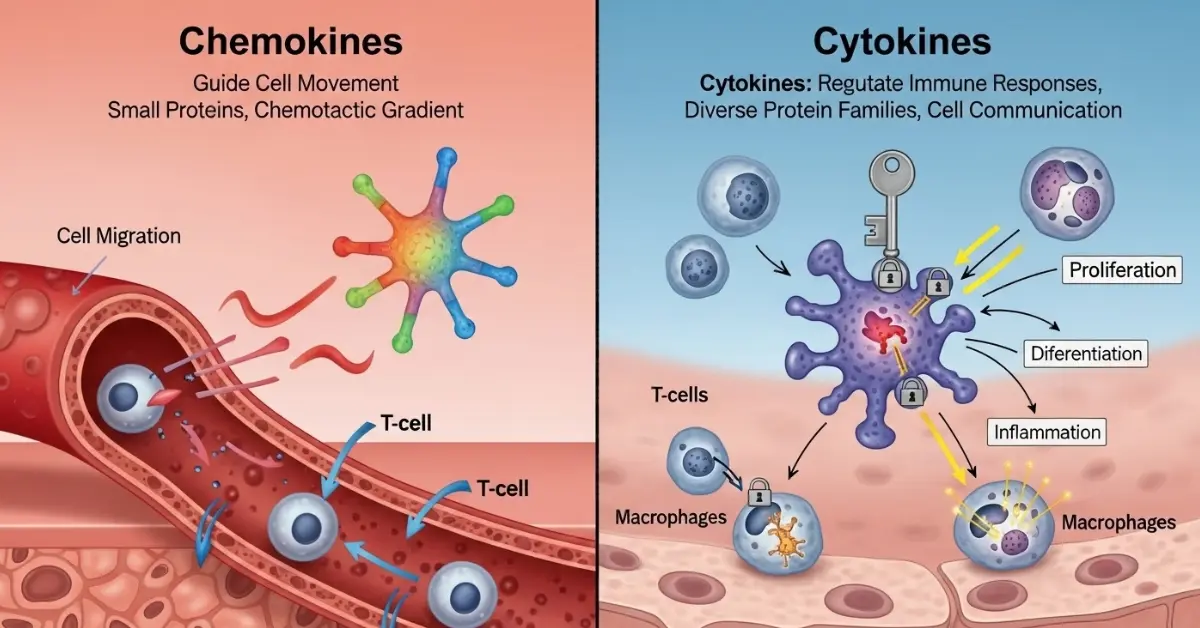
Imagine your school has a fire drill. The principal makes an announcement to everyone. At the same time, teachers guide students to the correct exits. Our body works in a similar way when we get sick. Tiny helpers inside our body send messages and guide immune cells. This is where we learn the difference between chemokines and cytokines.
Key Difference Between the Both
The main difference is simple:
- Cytokines send general messages to control the immune system.
- Chemokines are a special type of cytokine that guide immune cells to a specific place.
Easy rule: All chemokines are cytokines, but not all cytokines are chemokines.
Why It Is Important to Know the Difference
Students need to know this to understand how the body fights germs. Doctors and scientists study cytokines to treat diseases. They study chemokines to see how immune cells move in the body. This knowledge helps people stay healthy and helps doctors make better medicines.
Pronunciation
Chemokines
- US: kee-moh-kynz
- UK: kee-moh-kynz
Cytokines
- US: sy-toh-kynz
- UK: sy-toh-kynz
Now let’s learn more about the difference between chemokines and cytokines step by step.
Difference Between Chemokines and Cytokines
1. Meaning
- Cytokines: Proteins that send messages between cells.
- Example 1: Tell cells to fight germs.
- Example 2: Tell cells to calm down.
- Chemokines: Proteins that guide immune cells.
- Example 1: Call white blood cells to a cut.
- Example 2: Bring cells to infected tissue.
2. Main Job
- Cytokines: Control the immune response.
- Example 1: Cause fever.
- Example 2: Help healing.
- Chemokines: Help cells move to the right place.
- Example 1: Guide cells to wounds.
- Example 2: Attract fighter cells to germs.
3. Size of Group
- Cytokines: Big group of proteins.
- Example 1: Interleukins.
- Example 2: Interferons.
- Chemokines: Smaller group inside cytokines.
- Example 1: CCL2.
- Example 2: CXCL8.
4. Role in Inflammation
- Cytokines: Start and control swelling.
- Example 1: Make the area red.
- Example 2: Make it warm.
- Chemokines: Bring help to that area.
- Example 1: Call neutrophils.
- Example 2: Attract lymphocytes.
5. Message Type
- Cytokines: General messages.
- Example 1: “Fight harder!”
- Example 2: “Slow down!”
- Chemokines: Direction messages.
- Example 1: “Come here!”
- Example 2: “Move to this spot!”
6. Use in Medicine
- Cytokines: Used in some treatments.
- Example 1: Cancer therapy.
- Example 2: Virus treatment.
- Chemokines: Studied to stop disease spread.
- Example 1: HIV research.
- Example 2: Cancer research.
7. Effect on Body
- Cytokines: Can increase or decrease immune action.
- Example 1: Boost defense.
- Example 2: Reduce swelling.
- Chemokines: Mostly help with movement.
- Example 1: Move white blood cells.
- Example 2: Guide immune helpers.
8. When They Work
- Cytokines: Work during infection, injury, or stress.
- Example 1: During the flu.
- Example 2: After injury.
- Chemokines: Work when cells must travel.
- Example 1: Skin cut.
- Example 2: Bacterial infection.
9. What Happens If Too Much?
- Cytokines: Can cause too much inflammation.
- Example 1: High fever.
- Example 2: Severe swelling.
- Chemokines: Can cause too many cells in one place.
- Example 1: Extra swelling.
- Example 2: Tissue damage.
10. Simple Comparison
- Cytokines: Like school announcements.
- Chemokines: Like teachers guiding students.
Nature and Behaviour
Cytokines act like leaders. They tell cells what to do. They can make the immune system stronger or calmer.
Chemokines act like guides. They mainly show immune cells where to go.
Why Are People Confused?
People are confused because chemokines are part of cytokines. Both are small proteins. Both help during infection. That is why students mix them up.
Which Is Better in What Situation?
Cytokines are better when the body needs to control the whole immune system. For example, when you have the flu, your body needs to fight germs and control fever. Cytokines help manage all these actions. Doctors also use some cytokines in treatments to help patients fight serious diseases.
Chemokines are better when the body needs immune cells to move to one place. For example, if you get a cut, chemokines guide white blood cells to that exact spot. This helps stop infection and start healing.
Use in Metaphors and Similes
- Cytokines are like “school principals giving orders.”
- Chemokines are like “traffic police guiding cars.”
- Cytokines spread messages like “radio news.”
- Chemokines pull cells like “a magnet pulls metal.”
Connotative Meaning
Cytokines
- Neutral in science
- Positive in healing
- Negative when too many cause inflammation
Chemokines
- Neutral in science
- Positive in wound healing
- Negative if linked to disease spread
Idioms or Proverbs
There are no common idioms using these words because they are scientific terms.
But we can compare:
- “Follow the leader” (like chemokines guiding cells).
- “Spread the word” (like cytokines sending messages).
Works in Literature
There are no famous novels or poems named after chemokines or cytokines. These words are mostly used in science books and research papers.
Movies
There are no movies directly named after chemokines or cytokines. They are used in medical documentaries.
Frequently Asked Questions
1. Are chemokines cytokines? Yes, chemokines are a type of cytokine.
2. What do cytokines do? They send messages between immune cells.
3. What do chemokines do? They guide immune cells to infection sites.
4. Why are they important? They help the body fight germs.
5. Can they cause problems? Yes, too many can cause swelling or illness.
How Both Are Useful for Surroundings
They protect our body from germs. They help wounds heal. They keep the immune system balanced. Without them, our body would not know how to fight infections properly.
Final Words
Cytokines are message senders. Chemokines are special guides. Both work together to protect our body.
Conclusion
Cytokines send general instructions to control the immune system. Chemokines guide immune cells to the right place. Even though chemokines are part of cytokines, they have a special job. Learning their differences helps students understand how the body fights disease. Both are important for keeping us healthy and safe from infections.

I am a professional English article writer with expertise in creating clear, well-researched, and engaging content. I specialize in writing informative articles that maintain accuracy, strong structure, and a polished tone. My work reflects a deep understanding of grammar, vocabulary, and audience needs. I am committed to delivering high-quality content that communicates ideas effectively and adds value to readers.