One day a teacher asked students to count how many pencils were in the classroom. The students counted the pencils. They wrote the numbers on the board. These numbers were data.
Then the teacher asked another question. She asked, “Which student has the most pencils?” The students looked at the numbers and thought about them. They compared the numbers. This thinking was analytics. This story helps us learn the difference between data and analytics.
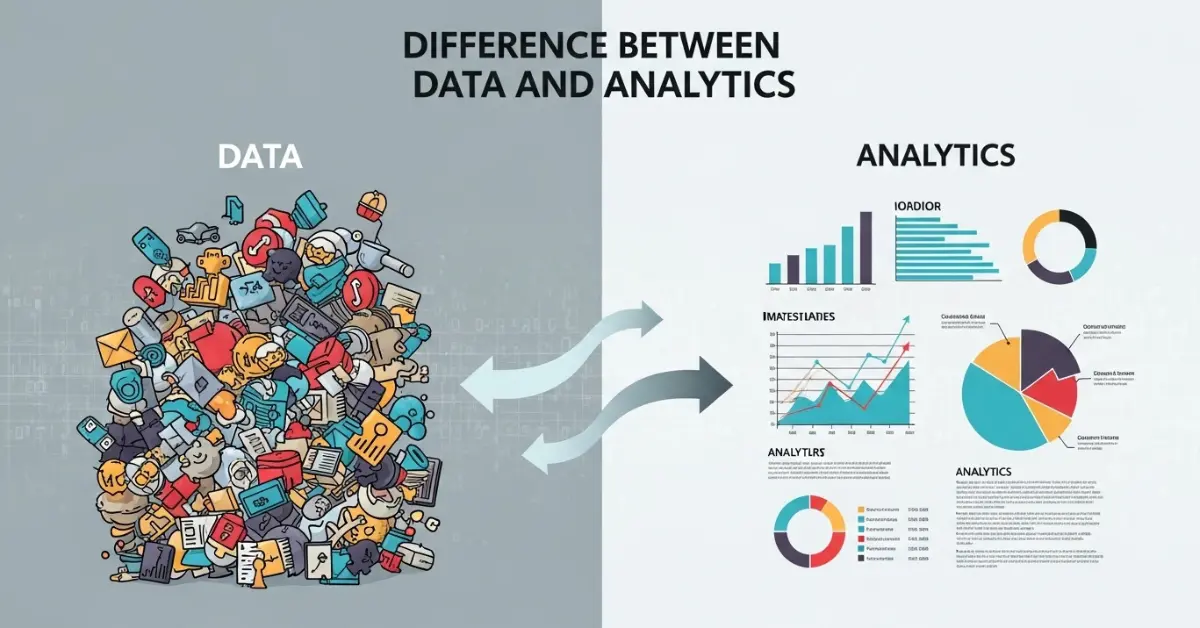
Data means pieces of information. Data can be numbers, words, or facts. Analytics means looking at the data and trying to understand it.
Key Difference Between the Both
The main difference between data and analytics is simple.
- Data is information.
- Analytics is thinking about the information.
Why It Is Important to Know
It is important to know the difference between data and analytics. Data tells us facts. Analytics helps us understand those facts.
People use data and analytics in schools, hospitals, shops, and offices. They help people learn new things and make smart decisions.
Pronunciation
Data US: day-tuh UK: day-tuh
Analytics US: an-uh-lit-iks UK: an-uh-lit-iks
Let’s Learn More
Now we will learn the difference between data and analytics in easy points.
Difference Between Data and Analytics
1. Meaning
Data means information.
Examples
- Number of students in class.
- Number of apples in a basket.
Analytics means studying information.
Examples
- Finding which class has more students.
- Finding which basket has more apples.
2. Purpose
Data shows facts.
Examples
- The temperature today.
- The number of books in a bag.
Analytics explains facts.
Examples
- Why the temperature changed.
- Which bag has the most books.
3. Form
Data can be numbers or words.
Examples
- Test scores.
- Names of students.
Analytics is thinking about the numbers.
Examples
- Finding the highest score.
- Comparing names in a list.
4. Role
Data gives raw information.
Examples
- Sales numbers in a shop.
- Number of cars on a road.
Analytics explains the information.
Examples
- Which day has most sales.
- Which road has more cars.
5. Process
Data is collected.
Examples
- Survey answers.
- School attendance numbers.
Analytics studies the data.
Examples
- Looking at survey results.
- Finding patterns in attendance.
6. Importance
Data is the starting point.
Examples
- A list of prices.
- A list of students.
Analytics helps understand the list.
Examples
- Finding the lowest price.
- Finding the best student.
7. Tools
Data is stored in tables or lists.
Examples
- A notebook list.
- A spreadsheet of numbers.
Analytics uses tools to study data.
Examples
- Charts and graphs.
- Computer programs.
8. Use
Data gives information.
Examples
- A list of books in the library.
- Daily step counts.
Analytics helps people decide.
Examples
- Choosing the most popular book.
- Checking health with step counts.
9. Complexity
Data is simple.
Examples
- Number 10.
- Word “apple”.
Analytics is deeper thinking.
Examples
- Why the number changed.
- What the pattern means.
10. Result
Data shows facts.
Examples
- Number of cars sold.
- Number of students present.
Analytics gives understanding.
Examples
- Why sales increased.
- Why attendance changed.
Nature and Behaviour
Data Data is information. It can be numbers, words, or facts.
Analytics Analytics studies the information and explains it.
Why People Get Confused
People get confused because data and analytics work together. Data gives the information. Analytics studies the information.
Which Is Better in What Situation?
Data Data is useful when we want to collect information. For example, schools collect test scores. Shops collect sales numbers.
Analytics Analytics is useful when we want to understand the information. Businesses study sales to see what customers like.
Metaphors and Similes
Data “Data is like puzzle pieces.”
Analytics “Analytics is like solving the puzzle.”
Connotative Meaning
Data Meaning: information.
Example: The teacher collected data about student marks.
Analytics Meaning: studying information.
Example: The company used analytics to improve sales.
Idioms
These words are not usually used in idioms.
Books Related to Data and Analytics
- Big Data — Viktor Mayer-Schönberger (2013)
- Data Science for Business — Foster Provost (2013)
Movies Related to Data
- Moneyball — 2011, USA
- The Social Dilemma — 2020, USA
Frequently Asked Questions
1. What is data? Data is information like numbers or facts.
2. What is analytics? Analytics means studying data.
3. Can analytics work without data? No, analytics needs data.
4. Why is data important? Data gives facts.
5. Why is analytics useful? Analytics helps people understand facts.
How Both Are Useful
Data and analytics help people learn and make good decisions.
Final Words
Data and analytics work together. Data gives facts. Analytics explains the facts.
Conclusion
The difference between data and analytics is simple. Data is information. Analytics studies the information. Data shows numbers, words, and facts. Analytics helps people understand those facts. Both are important in school, business, and everyday life.

I am a professional English article writer with expertise in creating clear, well-researched, and engaging content. I specialize in writing informative articles that maintain accuracy, strong structure, and a polished tone. My work reflects a deep understanding of grammar, vocabulary, and audience needs. I am committed to delivering high-quality content that communicates ideas effectively and adds value to readers.