Imagine Ali owns a small toy factory. Every week, he must check how much plastic, paint, and boxes he needs to make toys. He uses a simple computer system to plan these materials. This system is called Material Requirements Planning. As his factory grows bigger, Ali also needs to manage workers, salaries, sales, and money. Now he needs a bigger system called Enterprise Resource Planning.
When we talk about the difference between ERP and MRP, we are comparing two business systems. The difference between ERP and MRP is about how much work each system can do. The difference between ERP and MRP helps business owners choose the right tool.
Key Difference Between the Both
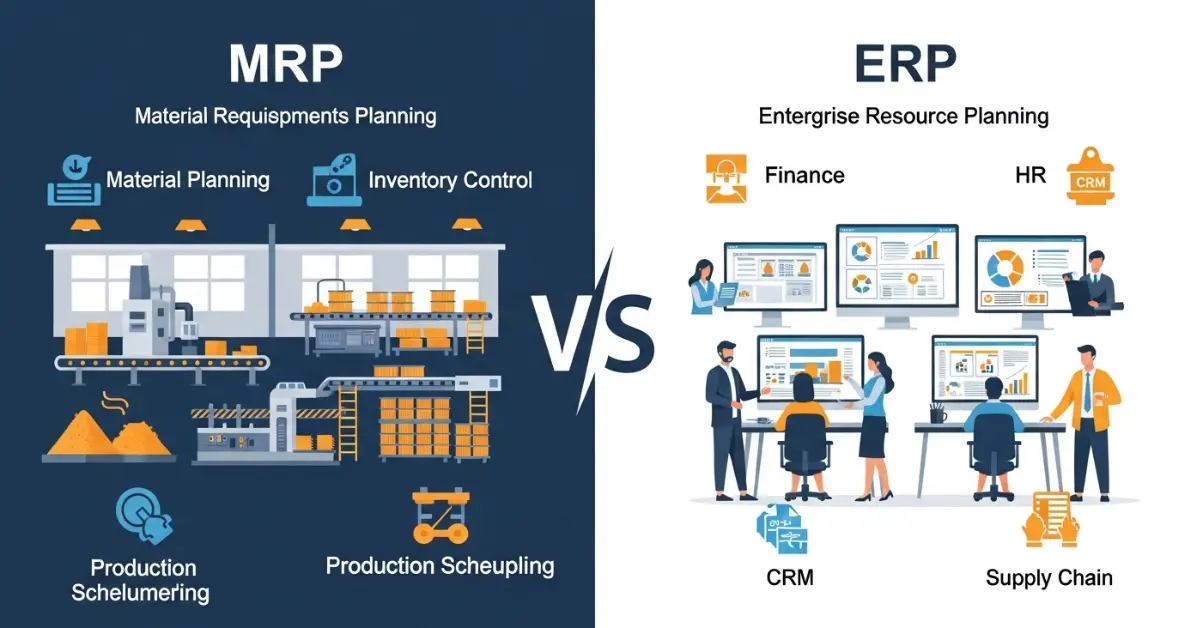
MRP only plans materials for making products. ERP plans and manages the whole business.
Why Is Their Difference Necessary to Know for Learners and Experts?
Students who study business must understand it. Experts and managers must choose the correct system. If a small factory uses a big system without need, it wastes money. If a big company uses a small system, it may face problems. These systems help companies save time, reduce waste, and serve customers better.
Pronunciation (US & UK)
- ERP
- US: /ee-ar-pee/
- UK: /ee-ah-pee/
- MRP
- US: /em-ar-pee/
- UK: /em-ah-pee/
Now let us learn more about the difference between ERP and MRP in simple steps.
Difference Between ERP and MRP
1. Full Form
MRP means Material Requirements Planning. Example 1: A bakery checks how much flour it needs. Example 2: A shoe factory checks leather stock.
ERP means Enterprise Resource Planning. Example 1: A company manages worker salaries. Example 2: A company tracks sales and money.
2. Main Focus
MRP focuses on materials only. Example 1: It tells when to buy wood. Example 2: It tells how much steel is needed.
ERP focuses on the whole business. Example 1: It manages finance. Example 2: It manages customer orders.
3. Departments
MRP works mostly in the factory. Example 1: Production planning. Example 2: Inventory checking.
ERP works in all departments. Example 1: HR keeps employee records. Example 2: Sales team checks reports.
4. Size of Business
MRP is good for small factories. Example 1: Small furniture shop. Example 2: Local clothing maker.
ERP is good for big companies. Example 1: Large car company. Example 2: Big supermarket chain.
5. Cost
MRP costs less money. Example 1: Easy to buy. Example 2: Cheap to maintain.
ERP costs more money. Example 1: Needs expert support. Example 2: Expensive software.
6. Complexity
MRP is simple. Example 1: Easy to learn. Example 2: Few features.
ERP is more complex. Example 1: Needs training. Example 2: Many features.
7. Data Sharing
MRP shares limited data. Example 1: Only production data. Example 2: Only material reports.
ERP shares all company data. Example 1: Sales connects with inventory. Example 2: Finance connects with purchases.
8. Decision Making
MRP helps with production decisions. Example 1: When to order materials. Example 2: How many products to make.
ERP helps with big business decisions. Example 1: Profit planning. Example 2: Growth planning.
9. History
MRP came first. Example 1: Used in old factories. Example 2: Basic computer systems.
ERP came later. Example 1: More advanced systems. Example 2: Cloud software today.
10. Coverage
MRP covers materials only. Example 1: Raw material tracking. Example 2: Production schedule.
ERP covers everything. Example 1: Accounts and payroll. Example 2: Sales and marketing.
Nature and Behaviour
MRP behaves like a planner. It checks what materials are needed and when.
ERP behaves like a manager. It controls all parts of the company together.
Why Are People Confused?
People are confused because both names sound similar. ERP also grew from MRP. So many think they are the same, but ERP is bigger and more complete.
Which Is Better in What Situation?
MRP is better for small factories. It is simple and affordable. If the business only makes products and does not need full company control, MRP is enough. It helps avoid shortage of materials and reduces waste.
ERP is better for big companies that have many departments. It keeps all information in one system. It helps managers see reports, profits, and employee data in one place. It saves time and improves teamwork between departments.
Metaphors and Similes
- MRP is like a shopping list for a kitchen.
- ERP is like the head chef who manages the whole restaurant.
- MRP is like a notebook for materials.
- ERP is like a control room of a big building.
Connotative Meaning
MRP – Neutral and helpful Example: “MRP helped the factory buy the right materials.”
ERP – Positive and powerful Example: “ERP made the company strong and organized.”
Idioms or Proverbs (Related in Meaning)
- “Plan ahead.” Example: The company uses MRP to plan ahead.
- “Time is money.” Example: ERP saves time, and time is money.
Works in Literature (Business Related)
- The Goal – Business novel, Eliyahu M. Goldratt, 1984
- Reengineering the Corporation – Business book, Michael Hammer, 1993
Movies Related to Business
- The Founder – 2016, USA
- Moneyball – 2011, USA
Frequently Asked Questions
1. What is the main difference between ERP and MRP? MRP plans materials. ERP plans the whole business.
2. Is ERP bigger than MRP? Yes, ERP is bigger and more complete.
3. Can small companies use ERP? Yes, but it may cost more.
4. Why was ERP created? To manage all departments together.
5. Do both help businesses? Yes, both improve planning and efficiency.
How Both Are Useful for Surroundings
Both systems reduce waste and save resources. They help companies use materials wisely. This helps protect the environment and supports better business practices.
Final Words for the Both
MRP is good for planning materials. ERP is good for managing everything. Both are useful tools for businesses.
Conclusion
The difference between ERP and MRP is simple. MRP focuses only on materials for production. ERP manages the entire company. Small businesses may choose MRP because it is simple and cheaper. Large businesses need ERP because it handles many departments together. Understanding their differences helps students, managers, and business owners make smart choices. Both systems are important in modern companies and help businesses grow successfully.

I am a professional English article writer with expertise in creating clear, well-researched, and engaging content. I specialize in writing informative articles that maintain accuracy, strong structure, and a polished tone. My work reflects a deep understanding of grammar, vocabulary, and audience needs. I am committed to delivering high-quality content that communicates ideas effectively and adds value to readers.