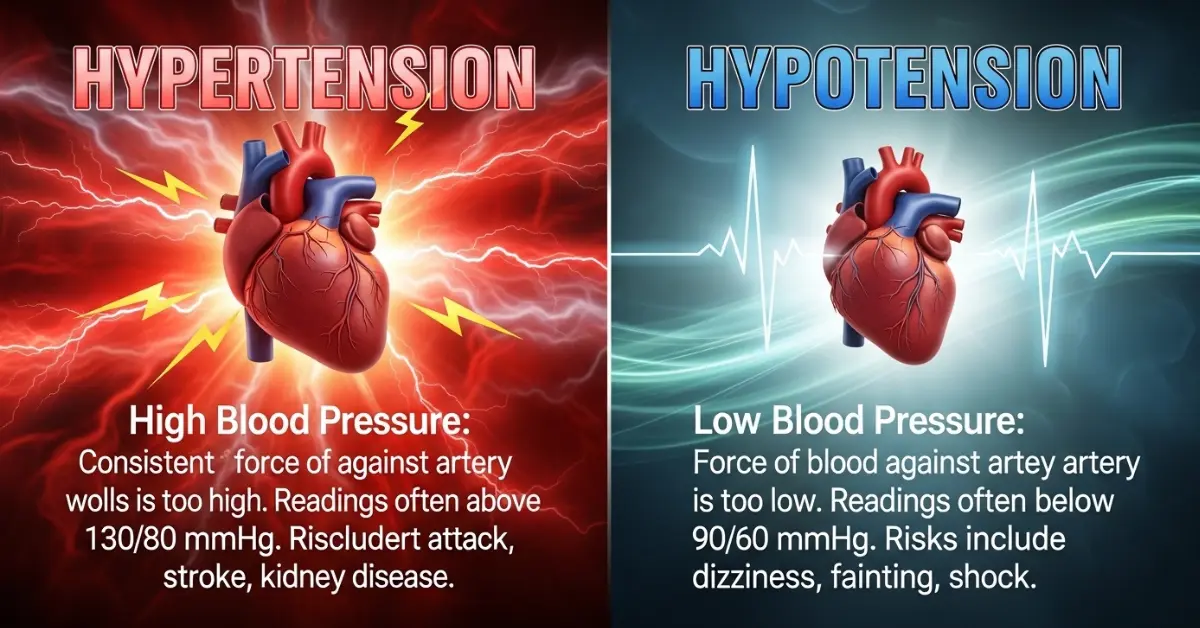
One morning, a school bus driver felt a strong headache and chest tightness. At the hospital, the doctor said he had high blood pressure. A week later, a young girl fainted during assembly because her blood pressure was too low. These real stories help us understand the difference between hypertension and hypotension.
Hypertension means blood pressure is too high. Hypotension means blood pressure is too low. Many people mix them up because the words sound alike. But knowing the difference between hypertension and hypotension helps us stay healthy.
Key Difference Between the Both
- Hypertension = High blood pressure (too much force).
- Hypotension = Low blood pressure (too little force).
One pushes too hard. The other does not push enough.
Why Is Their Difference Necessary to Know for Learners and Experts?
It is important for students, teachers, doctors, and parents to know this difference. High blood pressure can damage the heart and brain slowly. Low blood pressure can make a person faint suddenly.
When people understand these conditions, they can act quickly. Doctors give different treatments for each one. Awareness in society helps reduce deaths and hospital visits. Knowledge saves lives.
Pronunciation (US & UK)
- Hypertension
- US: /ˌhaɪ.pɚˈten.ʃən/
- UK: /ˌhaɪ.pəˈten.ʃən/
- Hypotension
- US: /ˌhaɪ.poʊˈten.ʃən/
- UK: /ˌhaɪ.pəʊˈten.ʃən/
Blood pressure may look like simple numbers, but those numbers tell us how healthy our heart is. Now let us understand the difference in a clear and simple way.
Difference Between Hypertension and Hypotension
1. Meaning
Hypertension: Blood pressure is higher than normal (above 130/80). Examples:
- A man with 150/90 reading.
- A stressed worker with high BP daily.
Hypotension: Blood pressure is lower than normal (below 90/60). Examples:
- A student with 85/55 reading.
- A weak elderly person with low BP.
2. Causes
Hypertension Causes:
- Eating too much salty food.
- Being overweight.
Hypotension Causes:
- Not drinking enough water.
- Losing blood from injury.
3. Symptoms
Hypertension Symptoms:
- Headache.
- Nosebleed (sometimes).
Hypotension Symptoms:
- Dizziness.
- Fainting.
4. Speed of Danger
Hypertension: Harms slowly over time. Examples:
- Damaged heart.
- Hurts kidneys.
Hypotension: Can harm quickly. Examples:
- Sudden fall.
- Shock in serious cases.
5. Long-Term Effects
Hypertension:
- Stroke.
- Heart attack.
Hypotension:
- Repeated fainting.
- Confusion in old age.
6. Treatment
Hypertension Treatment:
- Medicines.
- Exercise and healthy food.
Hypotension Treatment:
- Drink more water.
- Eat small, frequent meals.
7. Who Gets It More?
Hypertension:
- Adults over 40.
- People with stress.
Hypotension:
- Thin or weak people.
- Athletes sometimes.
8. Emergency Cases
Hypertension Emergency:
- Very high BP can cause strokes.
- Severe chest pain.
Hypotension Emergency:
- Heavy bleeding.
- Severe infection.
9. Daily Life Effect
Hypertension:
- It may feel normal but the body is harmed inside.
- Needs regular checkups.
Hypotension:
- A person feels weak quickly.
- I may need rest often.
10. Prevention
Hypertension Prevention:
- Less salt.
- Daily walking.
Hypotension Prevention:
- Stay hydrated.
- Stand up slowly.
Nature and Behaviour
Hypertension is often called a “silent killer.” It does not always show clear signs, but harms slowly.
Hypotension shows fast signs, such as dizziness. It is more sudden and noticeable.
Why People Are Confused
People get confused because both words sound similar. Both are about blood pressure. Both can make someone feel weak. But one means high pressure, and the other means low pressure.
Which Is Better in What Situation?
Hypertension is not better in any situation. A little higher pressure may help some elderly people avoid dizziness. Long-term high blood pressure damages organs. So it must be controlled.
Hypotension may be normal in healthy young athletes. Some fit people have naturally low blood pressure and feel fine. But very low pressure can be dangerous. Doctors always try to keep blood pressure balanced — not too high and not too low.
Use in Metaphors and Similes
- “His anger rose like hypertension.”
- “Her mood dropped like hypotension.”
Writers use these words to describe strong ups and downs.
Connotative Meaning
Hypertension: Negative (stress, pressure). Example: “Exam week gave him mental hypertension.”
Hypotension: Slightly negative (low energy). Example: “After losing the game, the team felt emotional hypotension.”
Idioms and Related Phrases
- Under pressure (like hypertension)
- Example: She works well under pressure.
- Feeling low (like hypotension)
- Example: He was feeling low after bad news.
Works in Literature
These terms appear in medical books such as:
- The Hypertension Handbook (Medical Guide, Dr. Norman Kaplan, 2002)
- Mayo Clinic Guide to High Blood Pressure (Health Guide, 2014)
Medical TV Shows Discussing These Conditions
- Grey’s Anatomy (2005, USA)
- House (2004, USA)
Five Frequently Asked Questions
1. What is the simple difference between hypertension and hypotension? Hypertension is high BP. Hypotension is low BP.
2. Which one is more dangerous? Both are dangerous if not treated.
3. Can children have these problems? Yes, but it is less common.
4. Can stress cause hypertension? Yes, stress can raise blood pressure.
5. Can not drinking water cause hypotension? Yes, dehydration can lower BP.
How Both Are Useful for the Surroundings
Learning about blood pressure helps families stay healthy. Healthy people work better and study better. Awareness in schools and offices reduces health problems in society.
Final Words for Both
Hypertension tells us to reduce stress and eat healthy food. Hypotension reminds us to drink water and take care of our bodies. Balance is always best.
Conclusion
Both affect the heart and brain. High pressure harms slowly. Low pressure can cause quick weakness. Understanding their causes, symptoms, and treatment helps us stay safe. Always check blood pressure regularly. A balanced level keeps the body strong and healthy.

I am a professional English article writer with expertise in creating clear, well-researched, and engaging content. I specialize in writing informative articles that maintain accuracy, strong structure, and a polished tone. My work reflects a deep understanding of grammar, vocabulary, and audience needs. I am committed to delivering high-quality content that communicates ideas effectively and adds value to readers.