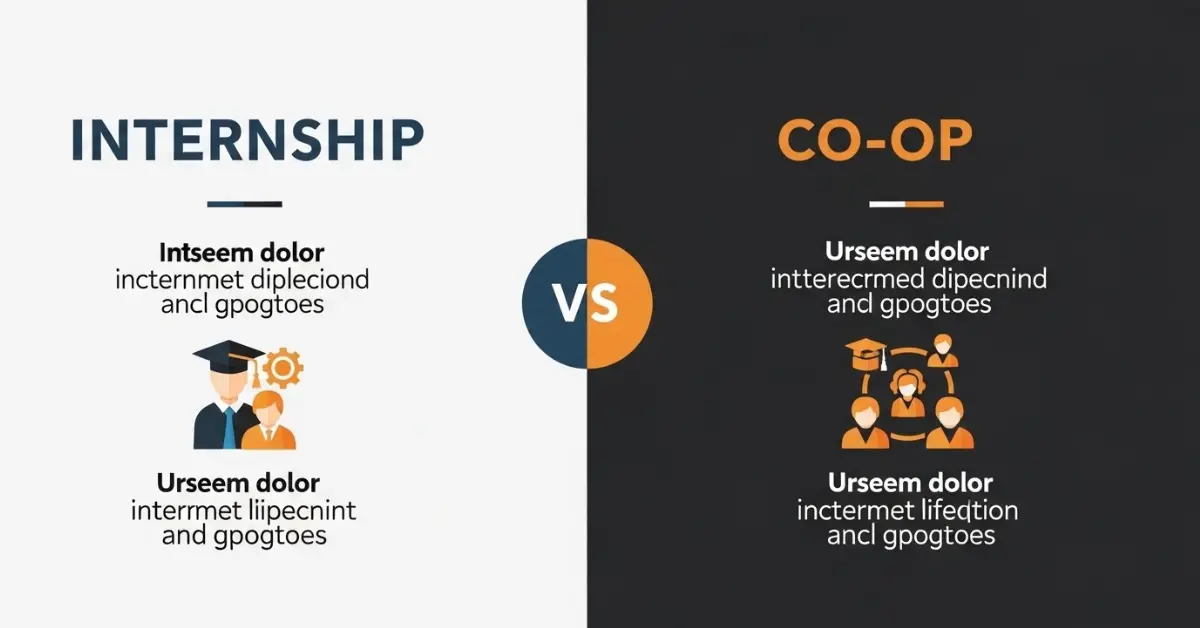
Imagine you are a student who wants to learn how real jobs work. Your teacher says you can join an internship. Your friend says she is doing a co-op. You may wonder, what is the difference between internship and coop?
To understand the difference between internship and coop, think about learning by doing. Both programs let students work in real companies.
Key Difference Between the Both
The main difference is:
- Internship: A short work experience, usually during summer or for a few months.
- Co-op (Cooperative Education): A longer work program that is part of school studies.
Internships are often shorter. Co-ops are usually longer and connected directly to school programs.
Why It Is Important to Know the Difference
It is important because students can choose what fits them best. If someone wants short job experience, an internship may be better. If someone wants long and deeper work learning connected to school, co-op may be better. Knowing the difference helps students plan their future careers.
Pronunciation
Internship
- US: in-tern-ship
- UK: in-tern-ship
Co-op (Cooperative Education)
- US: koh-op
- UK: koh-op
Now let’s understand the difference between internship and coop step by step.
Difference Between Internship and Co-op
1. Length of Time
- Internship: Short period.
- Example 1: Summer vacation job.
- Example 2: 2–3 months.
- Co-op: Longer period.
- Example 1: 6 months.
- Example 2: One full school term.
2. Connection to School
- Internship: May or may not give school credit.
- Example 1: Optional program.
- Example 2: Personal choice.
- Co-op: Part of the school program.
- Example 1: Required by college.
- Example 2: Gives academic credit.
3. Work Schedule
- Internship: Often during summer break.
- Example 1: June to August.
- Example 2: Part-time work.
- Co-op: During the school year.
- Example 1: Replace classes for a term.
- Example 2: Full-time work.
4. Pay
- Internship: May be paid or unpaid.
- Example 1: Paid office work.
- Example 2: Unpaid training.
- Co-op: Often paid.
- Example 1: Monthly salary.
- Example 2: Hourly wages.
5. Experience Level
- Internship: Basic introduction to the job.
- Example 1: Observe workers.
- Example 2: Help with small tasks.
- Co-op: Deeper job experience.
- Example 1: Real projects.
- Example 2: Bigger responsibilities.
6. Goal
- Internship: Explore career interest.
- Example 1: Try marketing job.
- Example 2: Learn about hospitals.
- Co-op: Gain strong work skills.
- Example 1: Engineering practice.
- Example 2: Computer programming work.
7. Competition
- Internship: Many students apply.
- Example 1: Limited seats.
- Example 2: Short selection process.
- Co-op: Organized by the school.
- Example 1: School helps find a job.
- Example 2: Structured system.
8. Learning Style
- Internship: Short learning time.
- Example 1: Training sessions.
- Example 2: Shadowing employees.
- Co-op: Long hands-on learning.
- Example 1: Team projects.
- Example 2: Problem-solving tasks.
9. Future Jobs
- Internship: May help get a job later.
- Example 1: Good resume point.
- Example 2: Networking chance.
- Co-op: Strong chance of job offer.
- Example 1: Companies may hire students.
- Example 2: Long work history.
10. Example Situation
- Internship: A student works in a bank for the summer.
- Co-op: A student works in a company for one semester as part of a degree.
Nature and Behaviour
Internship feels short and flexible. It helps students explore careers.
Co-op feels serious and structured. It mixes school learning with real job work.
Why Are People Confused?
People are confused because both give job experience. Both are for students. Both happen in companies. But the time length and school connection make them different.
Which Is Better in What Situation?
Internship is better if a student wants to try a job for a short time. It is good during summer vacation. It helps students explore different careers without long commitment.
Co-op is better if a student wants deep learning and strong work experience.
Use in Metaphors and Similes
- “An internship is like tasting a sample before buying.”
- “A co-op is like joining the team fully.”
- “Internship is a short test drive.”
- “Co-op is a long road trip.”
Connotative Meaning
Internship
- Positive: Learning opportunity
- Neutral: Short work program
Co-op
- Positive: Strong career step
- Serious and professional meaning
Idioms or Proverbs
There are no common idioms using these exact words.
But we can say:
- “Learn by doing” (fits both internship and co-op).
- “Practice makes perfect” (especially for co-op).
Works in Literature
There are no famous novels specifically named Internship or Co-op. These are educational terms.
Movies
There are movies about internships, such as:
- The Internship – Released in 2013, USA.
There are no famous movies directly titled Co-op.
Frequently Asked Questions
1. Is internship shorter than co-op? Yes, internships are usually shorter.
2. Does co-op give school credit? Yes, most co-op programs give credit.
3. Are internships paid? Some are paid, some are not.
4. Which is better for job chances? Co-op often gives stronger job experience.
5. Can high school students do internships? Yes, sometimes they can.
How Both Are Useful for Surroundings
Both help students learn real skills. They prepare young people for jobs. They help companies find future workers. They improve education and career growth.
Final Words
Internships are short job experiences. Co-ops are longer work programs linked with school. Both help students learn and grow.
Conclusion
The difference between internship and coop is mainly about time and school connection. Internships are short and flexible. Co-ops are longer and part of education programs. Both give valuable work experience. Learning through real work helps students build confidence and prepare for successful careers.

I am a professional English article writer with expertise in creating clear, well-researched, and engaging content. I specialize in writing informative articles that maintain accuracy, strong structure, and a polished tone. My work reflects a deep understanding of grammar, vocabulary, and audience needs. I am committed to delivering high-quality content that communicates ideas effectively and adds value to readers.