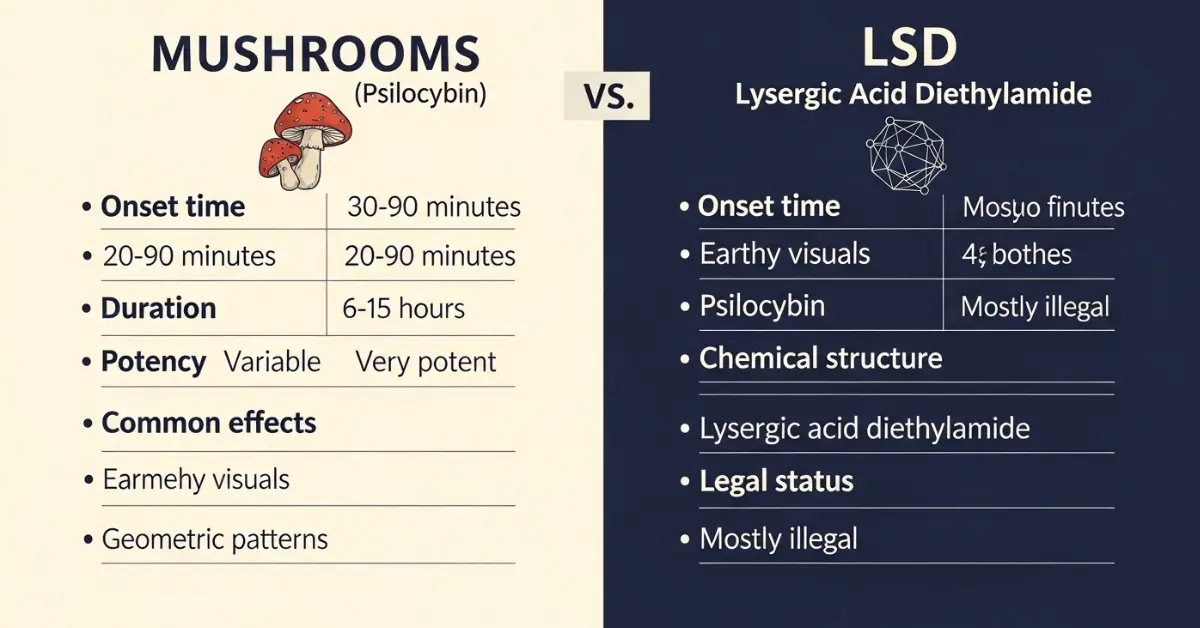
Many people hear the words “shrooms” and “acid” and think they are the same. But they are not exactly the same. Shrooms are a nickname for psychedelic mushrooms. Acid is a street name for a chemical drug called LSD. Both can change how a person thinks, feels, and sees the world for a few hours.
Pronunciation
Shrooms
- US: shroomz
- UK: shroomz
Acid (LSD)
- US: ASS-id
- UK: ASS-id
Key Difference Between the Both
- Shrooms come from certain types of mushrooms that contain a natural chemical called psilocybin.
- Acid is the street name for LSD, a man-made chemical.
One is natural (from fungi). The other is synthetic (made in a lab).
Why Is It Important to Know the Difference?
Understanding the difference helps people make informed and safe choices. Both substances are powerful and can affect mental health. They are illegal in many countries and can be risky. Learning the difference helps in education, health discussions, and public awareness.
Difference Between Shrooms and Acid
1. Source
- Shrooms: Come from mushrooms.
- Example 1: Psilocybin mushrooms grow in nature.
- Example 2: They are types of fungi.
- Acid: Made in a laboratory.
- Example 1: LSD is created from chemicals.
- Example 2: It does not grow naturally like mushrooms.
2. Main Chemical
- Shrooms: Contain psilocybin.
- Example 1: Psilocybin changes mood.
- Example 2: It affects how the brain sees colors and shapes.
- Acid: Contains LSD (lysergic acid diethylamide).
- Example 1: LSD is very strong even in tiny amounts.
- Example 2: It also changes perception and thoughts.
3. Duration (How Long It Lasts)
- Shrooms: Usually last 4–6 hours.
- Example 1: Effects may fade after half a day.
- Example 2: Some feelings continue softly.
- Acid: Can last 8–12 hours.
- Example 1: Effects may continue all day.
- Example 2: Sleep may be difficult during that time.
4. Strength
- Shrooms: Strength can vary from mushroom to mushroom.
- Example 1: One batch may be mild.
- Example 2: Another batch may be stronger.
- Acid: Measured in tiny units called micrograms.
- Example 1: Even a very small dose is powerful.
- Example 2: Effects are usually more predictable in strength.
5. Form
- Shrooms: Look like dried mushrooms.
- Example 1: Brown caps.
- Example 2: Dried pieces.
- Acid: Usually on small paper tabs.
- Example 1: Colorful paper squares.
- Example 2: Small drops on sugar cubes.
6. Body Feelings
- Shrooms: May cause nausea in some people.
- Example 1: Upset stomach.
- Example 2: Yawning or tired feeling at first.
- Acid: Less likely to upset the stomach but can increase heart rate.
- Example 1: Restlessness.
- Example 2: Trouble sleeping.
7. Mental Effects
- Shrooms: Often described as emotional and dreamy.
- Example 1: Feeling connected to nature.
- Example 2: Deep thinking.
- Acid: Often described as energetic and intense.
- Example 1: Bright visual patterns.
- Example 2: Fast thoughts.
8. Legality
- Shrooms: Illegal in many countries (some places allow limited use).
- Acid: Illegal in most countries.
Both are controlled substances in many parts of the world.
9. Risk
- Shrooms: Risk of anxiety or “bad trip.”
- Acid: Risk of panic, confusion, or long mental stress.
Both can affect mental health, especially in people with anxiety or other conditions.
10. Medical Research
- Shrooms: Being studied for depression treatment.
- Acid: Also studied in small research settings.
Both are being researched under strict medical rules.
Nature and Behavior
Shrooms: Natural substance, slower onset, often emotional effects.
Acid: Synthetic drug, longer lasting, often more intense visuals.
Why Are People Confused?
People are confused because both are psychedelic drugs. Both change how a person sees and feels things. Both can cause visual changes and strong emotions. That is why many think they are the same, but they are different in source and duration.
Which Is “Stronger”?
Acid usually lasts longer and can feel stronger because it stays in the body for many hours. Some people say mushrooms feel more natural and shorter in time. However, both can be powerful and risky. Strength depends on dose, body type, and mental state.
Metaphors and Similes
- Shrooms are like a slow walk through a dream.
- Acid is like a long roller coaster ride.
- Both can be like opening a door to a colorful world.
Connotative Meaning
Shrooms
- Positive: Natural psychedelic experience.
- Neutral: A type of hallucinogenic mushroom.
- Negative: Illegal drug use.
Acid
- Positive: Linked to 1960s counterculture history.
- Neutral: Street name for LSD.
- Negative: Dangerous illegal drug.
Movies Related to Psychedelic Culture
- Fear and Loathing in Las Vegas (1998, USA)
- The Doors (1991, USA)
FAQs
1. Are shrooms and acid the same? No. Shrooms are natural mushrooms, acid is a synthetic chemical.
2. Which lasts longer? Acid usually lasts longer than mushrooms.
3. Are they legal? In most countries, both are illegal.
4. Can they affect mental health? Yes. Both can increase anxiety or cause strong emotional reactions.
5. Are they being studied for medicine? Yes, under strict research rules.
How Both Affect Society
Both have influenced art, music, and culture. At the same time, they raise health and legal concerns. Governments regulate them because of safety risks.
Final Words
Shrooms and acid are both psychedelic substances, but they are not the same. One comes from nature, and the other is made in a lab. Both can be powerful and risky.
Conclusion
Shrooms come from natural mushrooms and usually last a shorter time. Acid is a man-made chemical that lasts longer and may feel stronger. Both affect the brain and can cause changes in mood, thinking, and vision. Understanding their differences helps people stay informed about health and safety.

I am a professional English article writer with expertise in creating clear, well-researched, and engaging content. I specialize in writing informative articles that maintain accuracy, strong structure, and a polished tone. My work reflects a deep understanding of grammar, vocabulary, and audience needs. I am committed to delivering high-quality content that communicates ideas effectively and adds value to readers.