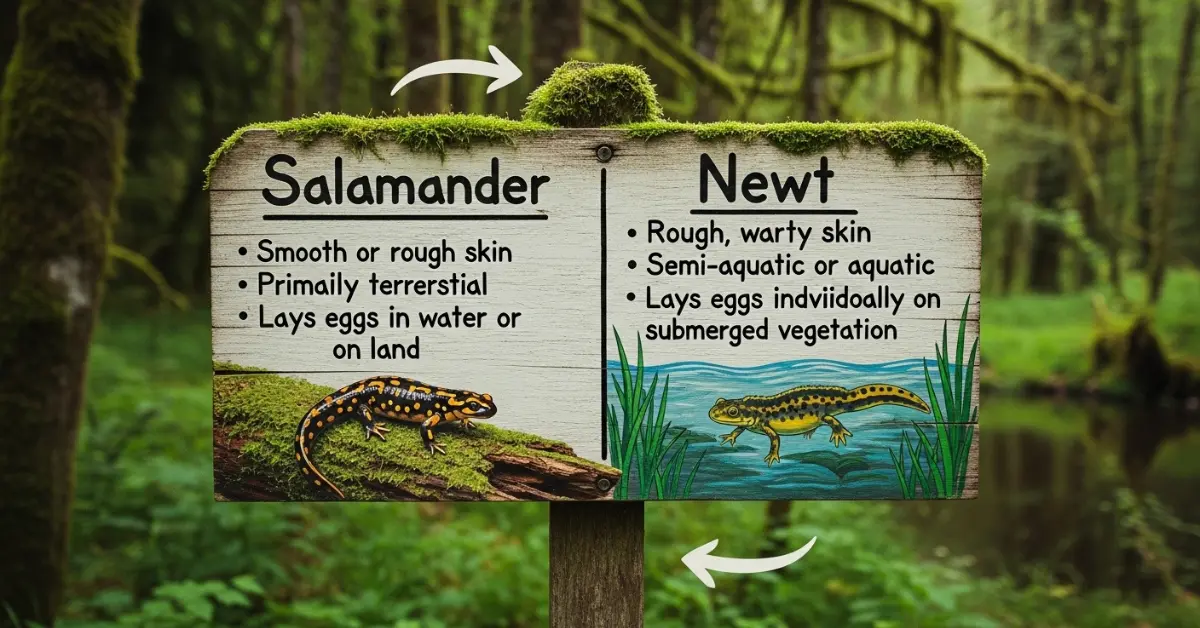
The difference between salamander and newt is simple. A salamander is a group of amphibians with smooth skin and long bodies. A newt is a type of salamander that often lives both in water and on land. All newts are salamanders, but not all salamanders are newts.
One day, a child saw a small, lizard-like animal near a pond. Someone said, “That is a salamander.” Another person said, “No, it is a newt.” This made the child confused.
Many people mix up these two animals because they look very similar. Both have long bodies, small legs, and smooth skin. The difference between salamanders and newts is not only about how they look. It is also about their life cycle and behavior.
You will learn what salamanders and newts are, how they are different, and how to tell them apart in real life. Everything is explained in very simple words.
What Is a Salamander?
A salamander is a type of amphibian. It has a long body, a tail, and soft, moist skin. It looks a bit like a small lizard, but it is not a reptile.
Salamanders usually live in wet places like forests, near rivers, or under stones. They like cool and damp areas.
Some salamanders stay on land most of the time, while others live in water.
Example: You may find a salamander under a rock after rain in a forest.
What Is Newt?
A newt is a special type of salamander. It is also an amphibian, but it has a unique life cycle. Newts often live both in water and on land during different stages of life.
They usually have rougher skin than other salamanders. Many newts spend more time in water, especially when they grow older.
Example: You may see a newt swimming in a pond during breeding season.
Key Differences Explained
Type
A salamander is a broad group. A newt is part of that group.
So, all newts are salamanders, but not all salamanders are newts.
Skin
Salamanders usually have smooth skin. Newts often have rough or bumpy skin.
This helps you tell them apart.
Habitat
Salamanders often live on land in wet areas. Newts spend more time in water, especially as adults.
Example: A salamander hides under logs. A newt swims in ponds.
Life Cycle
Newts go through more stages. They live in water, then land, then water again.
Salamanders may not change habitats as much.
Examples
Here are simple real-life examples:
- After rain, you may see salamanders in forests
- In ponds, you may see newts swimming
- In gardens with wet soil, salamanders may appear
- In quiet lakes, newts are more common
In many places, both animals live close to water but behave differently.
Importance of Knowing the Difference
Knowing the difference between salamander and newt helps you understand nature better. It helps you identify animals correctly.
This is useful for students, nature lovers, and anyone who enjoys wildlife. It also helps avoid confusion when learning science.
Benefits of Understanding Salamander vs Newt
- Helps in correct identification
- Improves science knowledge
- Reduces confusion
- Helps in school learning
- Makes nature study easier
- Builds observation skills
- Increases awareness of wildlife
Common Mistakes People Make
Mistake 1: Thinking they are the same They are related but not the same.
Mistake 2: Calling every salamander a newt Only some salamanders are newts.
Mistake 3: Judging only by looks Behavior and habitat also matter.
Real-Life Use
In real life, scientists, students, and nature lovers use these terms correctly.
- In schools, students learn about amphibians
- In forests, people may see salamanders
- Near ponds, people may notice newts
Knowing the difference helps in understanding what you see.
Easy Trick to Remember the Difference
Think like this:
Newt = Near water Newts spend more time in water
Salamander = Spread group It includes many types, including newts
Which One Is Better?
Neither is better. They are both important animals in nature.
Salamanders and newts both help control insects and keep the environment healthy.
The choice is not about better or worse. It is about understanding their role.
FAQs
1. What is the main difference between salamander and newt?
A salamander is a group, and a newt is a type within that group.
2. Are all newts salamanders?
Yes, all newts are salamanders.
3. Are salamanders and newts the same?
No, they are related but not the same.
4. Which lives more in water?
Newts spend more time in water.
5. How can I tell them apart?
Check the skin and habitat. Newts are rougher and more aquatic.
6. Why do people confuse them?
They look very similar in shape and size.
7. Which one should I learn first?
Start with salamanders, then understand newts as a type.
Conclusion
The difference between salamander and newt is easy once you understand the basics. A salamander is a larger group of amphibians, while a newt is a special type within that group.
Newts usually spend more time in water and have rougher skin. Salamanders can live more on land and often have smooth skin. Both are important for nature and help keep ecosystems balanced.
By learning this simple difference, you can identify these animals correctly. Next time you see one near water or in a forest, you will know exactly what it is.

I am Erneest Dowson, an English poet and writer. My work reflects deep emotions, beauty, and themes of love and sadness. I am known for my Professional, lyrical and romantic writing style.