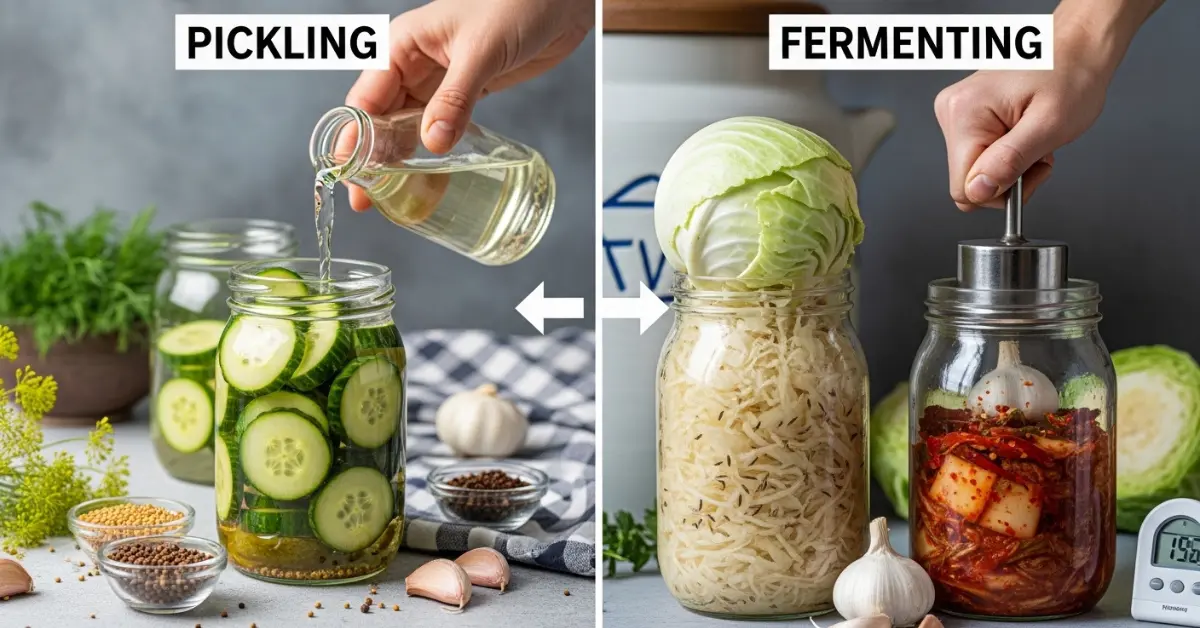
The difference between pickling and fermenting is that pickling uses vinegar to preserve food quickly, while fermenting uses natural bacteria to slowly change and preserve food.
A child once opened a kitchen shelf and saw two jars of vegetables. One jar had sour cucumbers floating in vinegar. The other jar had cabbage sitting in salty water for days. He wondered why both looked similar but tasted different.
The difference between pickling and fermenting is very important in food science. Both methods are used to preserve food so it lasts longer. But they are not the same. Pickling uses vinegar or strong salt for quick results. Fermenting uses natural bacteria and takes more time. In this article, we will learn both methods in very simple words with examples.
What Is the Difference Between Pickling and Fermenting?
The difference between pickling and fermenting is based on how food is preserved. Pickling uses vinegar, salt, or oil to stop food from spoiling quickly. Fermenting uses natural bacteria that slowly change food over time. Pickling is fast and simple, while fermenting is slow and natural.
What Is Pickling?
Pickling is a method of preserving food using vinegar, salt, or oil. These ingredients stop harmful bacteria from growing in the food. This helps food stay fresh for a long time without spoiling.
Pickling is a quick process and does not need much waiting time. Vegetables or fruits are placed in a strong solution and sealed in jars. The taste becomes sour, tangy, and sometimes spicy. It is used in many cultures around the world.
Pickling is very popular because it is easy and fast. People use it to store food when fresh vegetables are not available. It also adds strong flavor to meals. That is why pickles are found in almost every kitchen.
Uses of Pickling
Pickling is used for preserving cucumbers, mangoes, and lemons. It is used for making spicy side dishes for meals. It helps store vegetables for months without spoiling. It is used in traditional recipes in many countries. It is also used to add sour and spicy taste to food.
What Is Fermenting?
Fermenting is a natural process where food changes using good bacteria. These bacteria break down sugars and slowly preserve the food. No vinegar is used in this method.
Fermentation takes time and may last days or even weeks. During this time, food changes in taste, texture, and smell. The final food often becomes sour and healthy for digestion.
Fermenting is considered a very natural and healthy process. It improves food value and adds good bacteria called probiotics. These help improve stomach health and digestion.
Uses of Fermenting
Fermenting is used to make yogurt from milk. It is used for making cheese, kimchi, and sauerkraut. It is used in sourdough bread making. It helps create healthy drinks like kefir. It is used in many traditional and healthy food recipes.
Key Differences Between Pickling and Fermenting
The difference between pickling and fermenting becomes clear when we compare their making. Pickling uses vinegar or salt to preserve food quickly. Fermenting uses natural bacteria to slowly change food over time.
Pickling is a fast method, while fermenting is slow and natural. Pickling does not involve live bacteria changes. Fermenting depends completely on bacteria activity.
Taste is also different. Pickled food tastes strong, sour, and tangy. Fermented food tastes sour but more complex and natural. Fermentation also makes food healthier for digestion.
Which Is Better?
The answer depends on your needs. If you want quick food storage, pickling is better. It is fast, easy, and simple to prepare at home. It is great for making instant pickles.
If you want healthy food, fermenting is better. It adds good bacteria that help digestion. It is more natural and improves nutrition.
The difference between pickling and fermenting helps us choose wisely. Both are useful depending on purpose and taste.
Real-Life Examples
Pickling is used at home to make mango pickles, lemon pickles, and cucumber pickles. These are stored in jars and eaten with meals. They add strong and spicy flavor to food.
Fermenting is used to make yogurt from milk at home. It is also used to make kimchi, cheese, and sourdough bread. These foods are part of healthy diets in many countries.
In school science, students learn how vinegar preserves food in pickling. They also learn how bacteria help in fermentation. Both methods show different food preservation science.
Fun Facts
Pickling has been used for thousands of years in human history. Fermentation was used even before refrigerators existed. Pickles were carried by sailors on long sea journeys. Fermented foods are rich in probiotics that help digestion. Some fermented foods can take weeks to fully prepare. Both methods are still used all over the world today.
Why This Topic Is Important
Understanding the difference between pickling and fermenting helps students learn food science. It shows how food can be preserved in natural and artificial ways.
It also teaches the role of bacteria in food changes. This knowledge is useful in cooking and daily life. It helps students understand healthy eating and food storage methods.
Should You Choose Pickling or Fermenting?
If you need quick and easy food preservation, pickling is better. It is simple and does not take much time. It is also great for adding strong flavor to food.
If you want healthy and natural food, fermenting is better. It improves digestion and adds nutrition. It takes more time but gives health benefits.
Both methods are useful, and many homes use both depending on food type.
FAQ Section
Is fermenting better than pickling?
Fermenting is healthier, but pickling is faster. Both are useful in different ways.
Which is cheaper, pickling or fermenting?
Both are cheap, but pickling is quicker and easier for beginners.
Do I need fermenting at home?
You only need fermenting if you want healthy probiotic foods like yogurt.
Which is best for daily use?
Pickling is best for quick use, while fermenting is best for health benefits.
Conclusion
The difference between pickling and fermenting is simple but very important. Pickling uses vinegar or salt for quick preservation, while fermenting uses natural bacteria.
Pickling is fast and easy, while fermenting is slow but very healthy. Both methods are useful in cooking and food storage. Understanding them helps students learn better food science and daily life skills.

I am a professional English article writer with expertise in creating clear, well-researched, and engaging content. I specialize in writing informative articles that maintain accuracy, strong structure, and a polished tone. My work reflects a deep understanding of grammar, vocabulary, and audience needs. I am committed to delivering high-quality content that communicates ideas effectively and adds value to readers.