Bees and wasps are flying insects. They can look very similar. Both can sting, too.
But bees and wasps are not the same. The main difference between bees and wasps is their body, food, nests, and behavior.
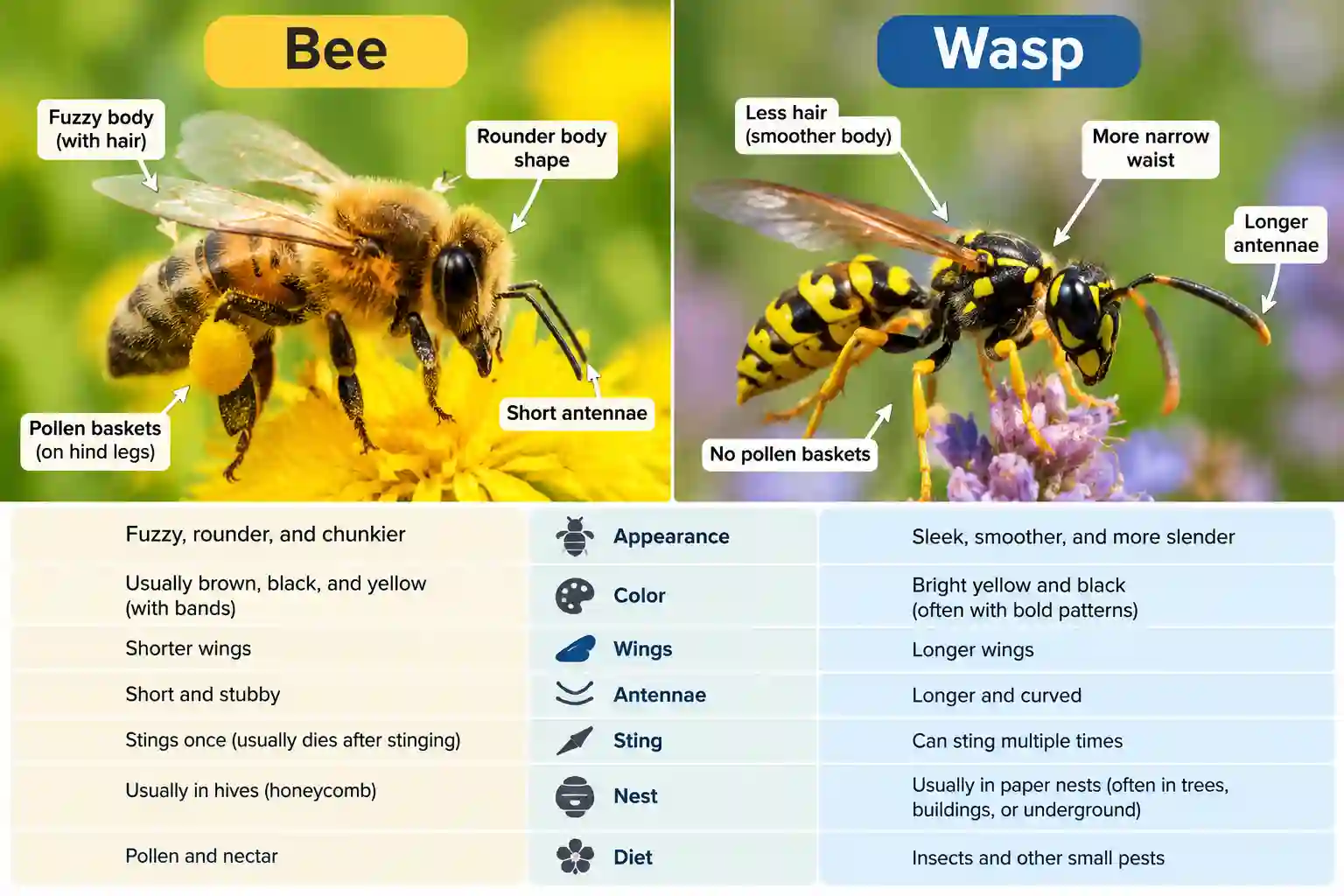
Bees are often hairy and round. Wasps are often smooth and thin. Bees visit flowers. Many wasps eat other insects.
What Are Bees?
Bees are small insects that fly from flower to flower.
They collect nectar and pollen. Bees help flowers make seeds and fruit. This job is called pollination.
Honey bees also make honey.
Most bees are not looking for people. They usually sting only when they feel threatened.
What Are Wasps?
Wasps are flying insects with a slim body.
Many wasps have a narrow waist. Their bodies are often smooth, not hairy.
Some wasps eat other insects. Some also eat fruit, nectar, and sweet foods.
Wasps can be useful because they help control some insects that can harm plants.
Difference Between Bees and Wasps
The easiest way to see the difference between bees and wasps is to look at their body.
| Bees | Wasps |
| Often hairy | Usually smooth |
| Round body | Slim body |
| No very thin waist | Often have a narrow waist |
| Eat nectar and pollen | Many eat insects |
| Honey bees make honey | Wasps do not make honey like honey bees |
| Usually sting when threatened | May sting when threatened or when protecting a nest |
Bee vs Wasp Appearance
A bee often looks fuzzy or hairy. It may have yellow, brown, or black colors.
A wasp often looks smooth and shiny. It may have yellow and black stripes.
A wasp also often has a thin waist.
These are simple clues, but there are many types of bees and wasps. Not every bee or wasp looks the same.
Wasp vs Bee vs Hornet
The wasp vs bee vs hornet comparison can be confusing.
A bee is usually hairy and round. Bees often visit flowers.
A wasp is usually smooth and slim. Many wasps hunt insects.
A hornet is a type of wasp. Hornets are often bigger than many common wasps.
So, a hornet is a wasp, but not every wasp is a hornet.
Difference Between Bees and Wasps Pictures
People often search for difference between bees and wasps pictures to learn how to tell them apart.
Pictures can help you see the body shape.
Look for these simple signs:
- Bee: hairy and round
- Wasp: smooth and slim
- Bee: usually less narrow at the waist
- Wasp: narrow waist
- Bee: often seen on flowers
- Wasp: may be seen hunting insects
When looking at photos of bees and wasps, remember that different species can look very different.
Photos of Bees and Wasps
Photos of bees and wasps can make learning easier, especially for children.
A bee may look fuzzy because it has hair on its body.
A wasp may look shiny because its body is smoother.
Do not use a photo alone to identify every insect. Some bees and wasps can look very similar.
Difference Between Bees and Wasps for Kids
The difference between bees and wasps for kids is easy to learn.
Think of it this way:
Bee = fuzzy and likes flowers.
Wasp = smooth and may hunt bugs.
Bees help plants grow by moving pollen.
Wasps can help by eating insects.
Both are important animals in nature.
Bee and Wasp Sting Difference
The bee and wasp sting difference is important.
Honey bees have a barbed stinger. When a honey bee stings a person, the stinger can stay in the skin. The bee usually dies after this.
Many wasps have a smooth stinger. They can pull it out and sting again.
Both stings can hurt. They may cause pain, redness, and swelling.
Do Bees Sting?
Yes, bees can sting.
A bee usually stings when it feels threatened or when its nest is in danger.
Honey bees usually sting only once because their stinger can stay in the skin.
It is best to leave bees alone and give them space.
Do Wasps Sting?
Yes, many wasps can sting.
A wasp may sting when it feels threatened or when someone gets close to its nest.
Many wasps can sting more than once.
Never try to touch or disturb a wasp nest.
Wasp Bee Dangerous: Are They Dangerous?
People often ask, wasp bee dangerous?
Bees and wasps can both be dangerous if they sting someone who has a serious allergy.
For most people, a sting causes pain, redness, or swelling.
The safest choice is to stay away from nests and avoid trying to catch or hit these insects.
Wasps or Bees Most Dangerous?
The question wasps or bees most dangerous does not have one simple answer.
Both can sting. Both can cause a serious allergic reaction in some people.
Wasps may be more likely to sting more than once because many wasps can use their stinger again.
But a bee can also cause a serious sting reaction.
The danger depends on the insect, the situation, and the person.
What Do Bees Eat?
Bees mainly collect:
- Nectar
- Pollen
Nectar gives bees energy.
Pollen gives them important food.
Honey bees use nectar to make honey.
What Do Wasps Eat?
Many wasps eat insects.
They may eat flies, caterpillars, and other small bugs.
Some wasps also eat:
- Fruit
- Nectar
- Sweet foods
This is one reason you may see wasps near fruit or sugary drinks.
Bee and Wasp Nests
Bees and wasps make different types of nests.
Honey bees live in colonies and make honeycomb.
Wasps often make paper-like nests. They may build nests in trees, under roofs, or in the ground.
Some bees also live in holes, trees, or the ground.
Never touch an active nest.
Are Wasps in the Same Family as Bees?
The answer to are wasps in the same family as bees is no, not in the same family.
But bees and wasps are closely related.
Both belong to the insect order called Hymenoptera.
They are also related to ants.
So, bees and wasps are like insect relatives, but they are not the same family.
Bees vs Wasps in Nature
Both bees and wasps are useful.
Bees are important pollinators. They move pollen from one flower to another.
Wasps can help control pests. Many wasps eat insects that can damage plants.
Some wasps also visit flowers and help with pollination.
So, both insects have an important job.
Do All Bees Make Honey?
No.
Only some bees make honey. Honey bees are the best-known honey-making bees.
There are many other types of bees that do not make honey for people to collect.
So, saying that every bee makes honey is not correct.
Do All Wasps Sting?
No, not all wasps behave in the same way.
Many wasps have a stinger. Some wasps are not aggressive toward people unless they feel threatened.
Their behavior can also depend on the species and the nest.
Are Bees or Wasps Better for Gardens?
Both can help gardens.
Bees are very good pollinators. They help many flowers and food plants grow.
Wasps can eat insects that may harm plants.
So, both bees and wasps can be useful in a garden.
How to Tell a Bee From a Wasp
To learn how to tell them apart, check these things:
1. Look at the Body
Bees are often round and hairy.
Wasps are often thin and smooth.
2. Look at the Waist
Wasps often have a narrow waist.
Bees usually look less narrow in the middle.
3. Look at the Food
Bees collect nectar and pollen.
Many wasps hunt insects.
4. Look at the Behavior
Bees often visit flowers.
Wasps may hunt insects or look for sweet food.
What Should You Do Near a Bee or Wasp?
Stay calm if you see a bee or wasp.
Do not hit it.
Do not try to catch it.
Move away slowly.
If you see a nest, stay away from it. If a nest is near your home, ask a trained pest professional for help.
What Happens After a Sting?
A sting can cause:
- Pain
- Redness
- Swelling
- Itching
Most mild stings get better with time.
But some people can have a serious allergic reaction.
Get emergency medical help if someone has:
- Trouble breathing
- Swelling of the throat or tongue
- Fainting
- Severe dizziness
- A serious whole-body reaction
Why Are Bees Important?
Bees help plants grow.
When bees visit flowers, they move pollen from one flower to another.
This helps plants make fruits and seeds.
Many foods depend on pollinators such as bees.
Why Are Wasps Important?
Wasps also help nature.
Many wasps eat insects. This can help keep pest numbers down.
Wasps can also visit flowers and help move pollen.
So, wasps are not simply “bad” insects.
Quick Difference Between Bees and Wasps
Here is the easy answer:
- Bees are often hairy.
- Wasps are usually smooth.
- Bees often have round bodies.
- Wasps often have thin bodies.
- Wasps often have a narrow waist.
- Bees collect pollen and nectar.
- Many wasps eat insects.
- Honey bees make honey.
- Many wasps can sting more than once.
- Both bees and wasps are useful in nature.
FAQs
What is the main difference between bees and wasps?
Bees are usually hairy and round. Wasps are usually smooth and slim. Bees often collect pollen and nectar, while many wasps hunt insects.
What is the difference between a bee, wasp, and hornet?
A bee is usually hairy. A wasp is usually smooth and slim. A hornet is a type of wasp and is often larger than many common wasps.
Which is more dangerous, a bee or a wasp?
Both can be dangerous if they sting someone with a serious allergy. Many wasps can sting more than once, but both should be treated with care.
Do bees die after they sting?
A honey bee usually dies after stinging because its barbed stinger can stay in the skin.
Can wasps sting more than once?
Yes. Many wasps have smooth stingers and can sting more than once.
Are bees and wasps related?
Yes. They are closely related insects. They both belong to the order Hymenoptera.
Are wasps in the same family as bees?
No. Bees and wasps are not in the same family, but they are close insect relatives.
Are bees good for the environment?
Yes. Bees are important pollinators. They help plants make fruits and seeds.
Are wasps good for the environment?
Yes. Many wasps eat insects and help control pests. Some also help with pollination.
Can kids tell bees and wasps apart?
Yes. A simple way is to look at the body. Bees are often fuzzy and round. Wasps are usually smooth and thin.
Final Answer
The difference between bees and wasps is easy to see once you know what to look for.
Bees are usually hairy and round. They visit flowers and collect pollen and nectar.
Wasps are usually smooth and slim. Many wasps hunt insects.
A hornet is a type of wasp.
Both bees and wasps can sting. Most stings are not serious, but some people can have a dangerous allergic reaction.
Both insects are also useful. Bees help pollinate plants, while many wasps help control pests.

I am a professional English article writer with expertise in creating clear, well-researched, and engaging content. I specialize in writing informative articles that maintain accuracy, strong structure, and a polished tone. My work reflects a deep understanding of grammar, vocabulary, and audience needs. I am committed to delivering high-quality content that communicates ideas effectively and adds value to readers.