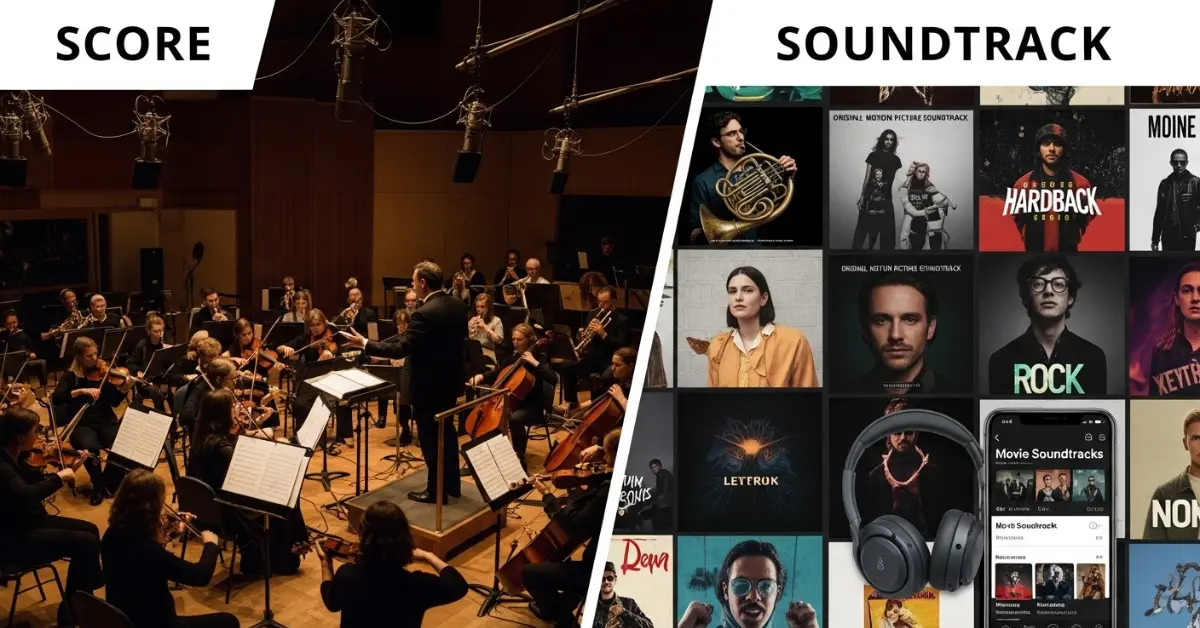
The difference between score and soundtrack is that a score is original background music made for a film, while a soundtrack includes all songs used in a movie.
Introduction
A student once watched a movie with his friends. He noticed beautiful music playing during emotional scenes. He also heard popular songs in the background. He wondered why there were two types of music in one movie.
The difference between score and soundtrack is common in films and TV shows. Both are types of music used in movies. But they are not the same. A score is original music made only for scenes. A soundtrack includes songs from different artists used in the movie. In this article, we will understand both in simple words with examples.
What Is the Difference Between Score and Soundtrack?
The difference between score and soundtrack is based on how the music is created and used. A score is original background music composed specially for a movie. A soundtrack is a collection of songs that may include popular music and score pieces. Score supports emotions, while soundtrack includes all music from the film.
What Is a Score?
A score is original music created specially for a movie, show, or game. It is usually instrumental, meaning it has no singing. A composer writes the score to match scenes and emotions.
Scores are used to increase emotions in movies. They make sad scenes more emotional and action scenes more exciting. They are carefully timed with what happens on screen.
A score is not usually a popular song. It is created only for the film and cannot be heard as a normal song on radio. It is made to support storytelling in movies.
Uses of Score
A score is used to create emotion in movie scenes. It is used during action scenes to build excitement. It is used in sad scenes to increase feelings. It helps connect story moments smoothly. It is used in background music for films and games. It supports storytelling without lyrics.
What Is a Soundtrack?
A soundtrack is a collection of songs used in a movie or show. It can include both original score music and popular songs. Some songs may have singing and lyrics.
Soundtracks are often released as albums for fans. They include all music heard in the movie. This can include background songs, opening songs, and ending songs.
Soundtracks are very popular because they include well-known music. People often listen to them even outside the movie. They are used to set mood and style in films.
Uses of Soundtrack
A soundtrack is used to include songs in movies. It is used in opening and ending credits. It is used to show emotions with popular music. It is released as an album for listeners. It is used in trailers and promotions. It helps make movies more entertaining.
Key Differences Between Score and Soundtrack
The difference between score and soundtrack starts with creation. A score is original music made only for a movie. A soundtrack is a collection of songs used in the movie.
Another difference is singing. Scores are usually instrumental with no lyrics. Soundtracks can include songs with lyrics and vocals.
Purpose is also different. Scores focus on emotions and background support. Soundtracks focus on songs that represent the movie’s style.
Which Is Better?
The answer depends on what you like. If you enjoy emotional background music in movies, then score is better. It helps you feel the movie deeply.
If you enjoy listening to songs, then soundtrack is better. It includes popular music and full songs.
The difference between score and soundtrack shows that both are important in films. One supports emotion, and the other adds entertainment.
Real-Life Examples
A score is used in movies during sad or action scenes. For example, in superhero movies, background music builds tension. It helps make scenes more exciting and emotional.
Students often hear both in films but do not notice the difference. Scores are subtle, while soundtracks are more noticeable.
Fun Facts
Film scores are often made by professional composers. Soundtracks can include famous singers and bands. Some movie scores become very famous worldwide. Soundtracks are often sold as music albums. Scores are usually not released as full songs. Both are important in making movies enjoyable.
Why This Topic Is Important
Understanding the difference between score and soundtrack helps students learn about film music. It shows how music supports storytelling in movies.
It also helps in understanding how emotions are created in films. Students can recognize different types of music while watching movies.
This knowledge is useful for media, music, and film studies.
Should You Focus on Score or Soundtrack?
If you love emotional background music, focus on score. It helps you understand movie feelings better.
If you love songs and music albums, focus on soundtrack. It includes popular and enjoyable songs.
Both are useful depending on your interest in music and movies.
FAQ Section
What is the difference between score and soundtrack?
Is score part of soundtrack?
Yes, score is often included in the soundtrack album.
Which is better, score or soundtrack?
Score is better for emotions, while soundtrack is better for songs and entertainment.
Do all movies have both score and soundtrack?
Most movies have both, but not all include full soundtracks.
Who creates movie scores?
Movie scores are created by professional music composers.
Conclusion
The difference between score and soundtrack is simple but important. A score is original background music made for emotions, while a soundtrack is a collection of songs used in films.
Both play important roles in movies. Score builds emotion, while soundtrack adds entertainment. Understanding both helps students enjoy films in a better way.

I am a professional English article writer with expertise in creating clear, well-researched, and engaging content. I specialize in writing informative articles that maintain accuracy, strong structure, and a polished tone. My work reflects a deep understanding of grammar, vocabulary, and audience needs. I am committed to delivering high-quality content that communicates ideas effectively and adds value to readers.