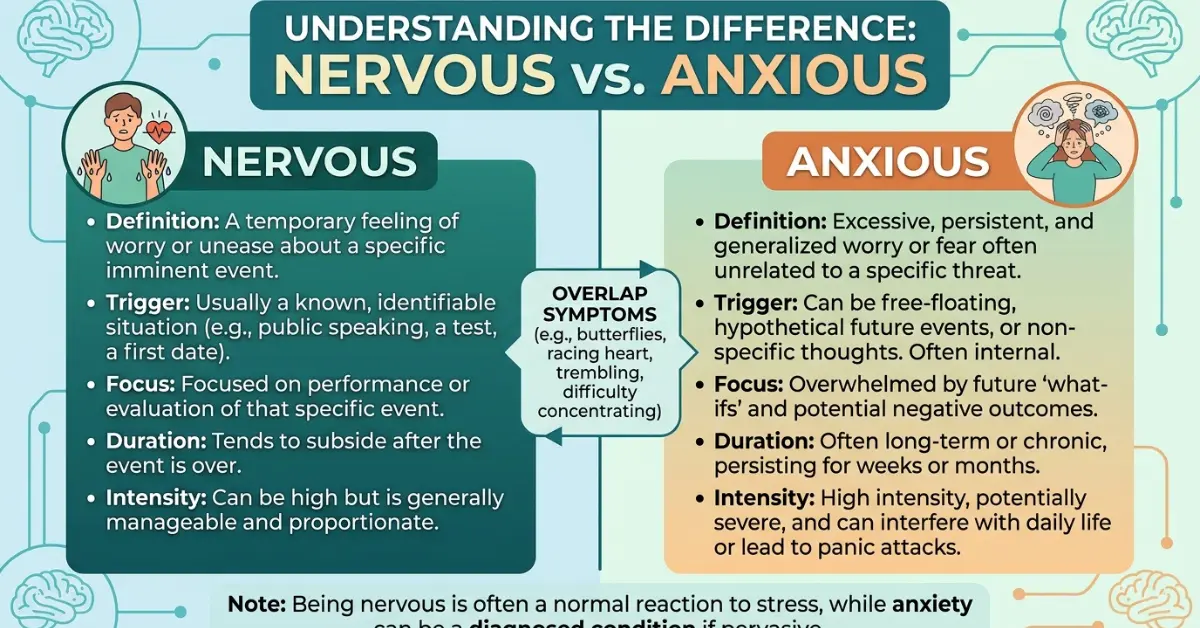
The difference between nervous and anxious is that nervousness is a short-term feeling about a specific situation, while anxiety is a stronger, longer-lasting feeling that may not have a clear reason.
Do you ever feel your heart beat fast before an exam or a big event? You might say, “I feel nervous.” But sometimes, you feel worried for a long time without knowing why. That feeling is often called anxiety.
Many people confuse these two feelings. They use the words in the same way. But the difference between nervous and anxious is important to understand. These feelings affect your thoughts, behavior, and daily life.
Beginners often ask: what is the difference between nervous and anxious? How is nervous different from anxious? Nervous vs anxious which is stronger?
In this article, you will learn everything in very simple words. We will explain the meaning, features, causes, and usage of both feelings. You will also see real-life examples. This nervous vs anxious comparison will help you understand your emotions better.
What Is Nervous?
Nervous means you feel worried or uneasy about something that will happen soon. This feeling is usually short and mild.
Key Features:
- Happens before a specific event
- Short-term feeling
- Mild level of worry
- Easy to control
- Often goes away quickly
Example:
A student feels nervous before giving a class presentation. After the presentation ends, the feeling disappears.
Meaning and Purpose:
Nervousness prepares your body for action. It helps you stay alert and focused. It is a normal and healthy response.
What Is Anxious?
Anxious means you feel strong worry, fear, or unease. This feeling may last longer and may not always have a clear reason.
Key Features:
- Can happen without a clear cause
- Lasts longer than nervousness
- Strong emotional feeling
- Harder to control
- Can affect daily life
Example:
A person feels anxious all day without knowing why. They keep worrying about different things.
Meaning and Purpose:
Anxiety acts as a warning signal. It tells your mind that something may be wrong. But too much anxiety can cause stress and discomfort.
Difference Between Nervous and Anxious
Here is a simple nervous vs anxious comparison:
- Nervousness is short-term, while anxiety lasts longer
- Nervousness has a clear reason, while anxiety may not
- Nervousness feels mild, while anxiety feels stronger
- Nervousness disappears quickly, while anxiety stays longer
- Nervousness helps focus, while anxiety can disturb daily life
Key Differences Explained
Meaning
Nervous means slight worry about something specific. Anxious means strong worry that may not have a clear reason.
Example: You feel nervous before a test. You feel anxious without knowing why.
Function
Nervousness prepares you for a situation. Anxiety warns you but can overwhelm you.
Example: Nervousness helps you perform better. Anxiety may make you feel stuck.
Usage
People use “nervous” for short events. People use “anxious” for deeper feelings.
Example: “I feel nervous before my interview.” “I feel anxious all day.”
Features
Nervousness stays mild and temporary. Anxiety feels intense and long-lasting.
Example: Nervousness fades quickly. Anxiety stays for hours or days.
Behavior
Nervous people may feel slight tension. Anxious people may feel restless, worried, or fearful.
Example: Nervousness causes small stress. Anxiety causes strong stress.
Purpose
Nervousness helps you stay ready. Anxiety signals deeper emotional concern.
Example: Nervousness improves focus. Anxiety may reduce focus.
Examples
Here are simple real-life examples:
- Before an exam → Nervous
- Waiting for results → Nervous
- Feeling worried all day → Anxious
- Overthinking many problems → Anxious
- Speaking on stage → Nervous
- Feeling uneasy without reason → Anxious
Importance of Knowing the Difference
Understanding the difference between nervous and anxious helps you understand your feelings.
You can manage your emotions better. You can respond in the right way. You can seek help when needed.
For example, nervousness does not need much attention. Anxiety may need care and support.
Benefits of Understanding Nervous vs Anxious
- Better emotional awareness
- Improved mental health understanding
- Less confusion about feelings
- Better control over reactions
- More confidence in handling stress
Common Mistakes People Make
Many people confuse nervousness and anxiety.
Mistakes:
- Using both words in the same way
- Ignoring long-term anxiety
- Thinking anxiety is always normal
- Not recognizing emotional differences
Correction:
Understand the duration and intensity. Nervousness is short and mild. Anxiety is longer and stronger.
Real-Life Use
Nervous:
- Before exams
- Before interviews
- Before public speaking
- Before important events
Anxious:
- During long-term stress
- When overthinking
- During uncertainty
- When feeling constant worry
Easy Trick to Remember the Difference
Use this simple trick:
👉 Nervous = Short and specific 👉 Anxious = Long and unclear
Or:
👉 Nervous = Small worry 👉 Anxious = Big worry
Which One Is Better?
Many people ask, “nervous or anxious, which is better?”
Nervousness is normal and often helpful. Anxiety can become difficult if it lasts too long.
So, nervous vs anxious comparison to handle, while anxiety needs more attention.
FAQs
1. What is the difference between nervous and anxious?
Nervousness is short-term and mild, while anxiety is stronger and long-lasting.
2. How is nervous different from anxious?
Nervousness has a clear reason, while anxiety may not.
3. Nervous vs anxious which is stronger?
Anxiety is stronger than nervousness.
4. Can nervousness turn into anxiety?
Yes, if worry continues for a long time, it can become anxiety.
5. Why is nervous not the same as anxious?
Because nervousness is temporary, while anxiety lasts longer.
6. Is anxiety always bad?
No, but too much anxiety can affect daily life.
7. Which is easier to control?
Nervousness is easier to control than anxiety.
Conclusion
The difference between nervous and anxious when you understand their meaning and behavior. Nervousness is a short and mild feeling that happens before specific events. Anxiety is a stronger and longer-lasting feeling that may not have a clear cause.
Nervousness helps you stay alert and focused. Anxiety can sometimes make you feel overwhelmed. Both feelings are natural, but they affect you in different ways.
If you feel nervous, you can relax and move forward. If you feel anxious, you may need to take extra care of your mental health. Understanding nervous vs anxious helps and live a more balanced life.

I am Erneest Dowson, an English poet and writer. My work reflects deep emotions, beauty, and themes of love and sadness. I am known for my Professional, lyrical and romantic writing style.